
U.S. Supreme Court
Furman v. Georgia: The 1972 Decision Explained
Furman v. Georgia stopped death sentences under the laws then in force because the Court found arbitrary punishment. Here is what the 1972 ruling did and did not decide.
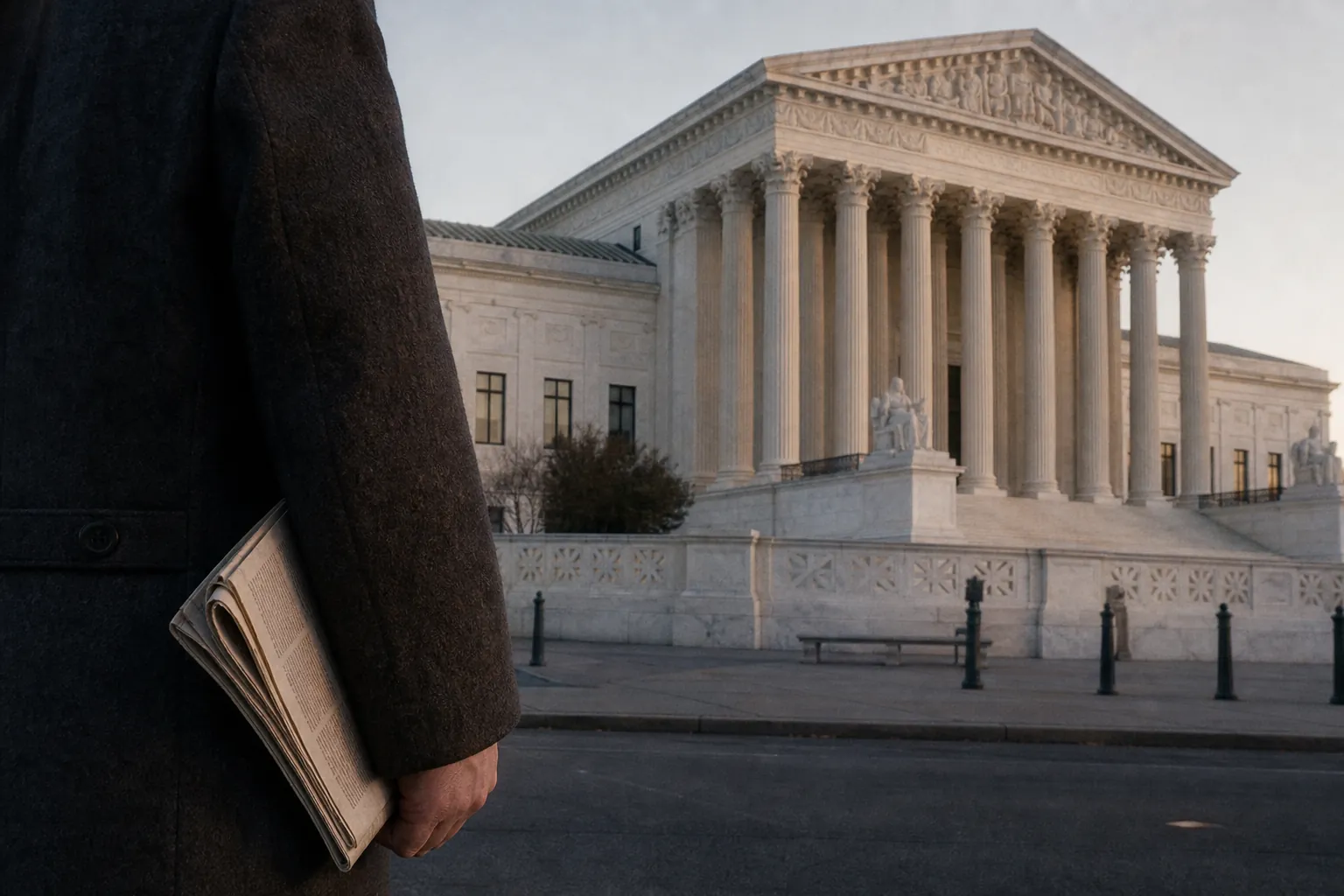
Furman v. Georgia is the 1972 Supreme Court decision that stopped the death sentences then in force across the United States. It did not settle every constitutional question about capital punishment. It did force the country to confront a basic problem: who was being sentenced to die, and why?
The Court's decision was fractured. The justices wrote separate opinions rather than one majority explanation. Still, the result was clear. The death sentences in the cases before the Court could not stand, and the ruling effectively paused executions under the laws then in use. States that wanted to keep capital punishment had to reconsider their statutes.
This guide explains the ruling in plain language, why arbitrary punishment was at the center of the case, what Furman did not decide, and how it led to Gregg v. Georgia four years later. It also connects that national legal history to the questions Western New Yorkers face when following a federal death-penalty case in Buffalo.
The short answer
In Furman v. Georgia, the Supreme Court ruled that the death sentences before it were unconstitutional because the existing systems produced arbitrary and inconsistent outcomes. The decision did not permanently ban the death penalty, but it stopped the laws then in force and forced states to rewrite their sentencing rules.
The legal citation is 408 U.S. 238. The Court decided the case on June 29, 1972, alongside two related cases, Jackson v. Georgia and Branch v. Texas. The Court issued a brief per curiam judgment, then published nine separate opinions. That unusual structure is one reason the case can feel difficult to summarize.
For everyday readers, the most useful takeaway is this: the Court did not say that murder was unimportant or that serious crimes did not deserve accountability. It said a punishment as final as execution could not be administered through systems that left so much to unstructured judgment and produced outcomes that looked arbitrary.
What happened before Furman?
In the decades before Furman, many states allowed juries to choose between life imprisonment and death with little guidance. In practice, similar crimes could lead to radically different results. The law often gave decision-makers broad discretion without clear standards for when death should be imposed or how personal circumstances should affect sentencing.
William Henry Furman was convicted in Georgia after a killing during a nighttime burglary. He said the gun went off accidentally while he was trying to escape. The jury convicted him of murder and imposed death. The Supreme Court did not retry the facts of the case. Instead, it examined whether the death sentence could stand under the Constitution.
The Court's concern was larger than one trial. The justices confronted evidence that death sentences were imposed rarely and unevenly. In separate concurrences, Justices Potter Stewart and Byron White focused on the infrequency and apparent randomness of the punishment. Justice Stewart famously compared the outcome to being struck by lightning, an image that captured the Court's concern that death was not being imposed through a consistently guided legal process.
That point is easy to miss when a case is reduced to a date and a holding. A sentencing system can contain formal rules and still produce outcomes that are difficult to defend as principled. One jury may treat a circumstance as decisive while another jury gives it little weight. One defendant may have skilled counsel and a fully developed mitigation case, while another may not. Furman made the country confront the distance between saying death was available for the most serious crimes and showing that it was being selected through a reliable, evenhanded process.

Why the Court found the sentences unconstitutional
The decisive votes in Furman did not rest on one shared test. That is important. The Court did not issue a single sentence saying exactly how every future capital law had to work. But five justices agreed that the death sentences before them violated the Eighth and Fourteenth Amendments.
Several opinions focused on arbitrariness. If a punishment is available in theory but imposed unpredictably in practice, the legal system may be unable to explain why one person receives death while another person in a similar situation does not. When the stakes are irreversible, that lack of consistency becomes a constitutional problem, not just a policy concern.
Justice William O. Douglas wrote about the risk that discretionary death sentencing could fall hardest on people with the least power. Justice Thurgood Marshall concluded that an informed public would find capital punishment excessive. Justice William Brennan took the broader view that the death penalty was incompatible with human dignity. Their reasoning differed, but the result invalidated the sentences.
The divided opinions also explain why Furman remains important in legal education. There is no shortcut that captures every justice's theory. The case is best understood as a constitutional warning about an irreversible punishment administered without consistent standards. That warning became the starting point for the detailed sentencing procedures that followed, and for decades of later litigation over whether those procedures actually protect against unfairness.
The decision did not erase the harm caused by the underlying crimes. It addressed the government's authority to select people for execution. That distinction remains useful in public conversation. Accountability can be real and severe while still asking whether a legal system can apply death fairly, consistently, and without error.

Did Furman abolish the death penalty?
No. Furman invalidated the death sentences imposed under the laws before the Court. It did not hold that every possible death-penalty statute would always be unconstitutional. That distinction shaped what happened next.
After the ruling, states took different approaches. Some adopted mandatory death sentences for certain murders, hoping to remove the discretion that had worried the Court. Others created "guided discretion" systems. Those laws separated the guilt phase from a later sentencing phase, required juries to find specified aggravating circumstances before death could be considered, and allowed the defense to present mitigating evidence.
The Supreme Court reviewed several of those new laws in 1976. In Gregg v. Georgia, the Court approved Georgia's guided-discretion statute. On the same day, it rejected mandatory death sentences in Woodson v. North Carolina. The message was not that a new formula had solved every problem. It was that the Court believed some revised procedures could survive constitutional review.
That is why it is more accurate to say that Furman stopped the death penalty laws then in force, while Gregg allowed some newly written laws to operate. The coalition's broader guide to major Supreme Court death-penalty cases shows how later decisions continued to limit, revise, and review that legal framework.
What changed after Furman, and what did not
The post-Furman laws tried to channel discretion. They asked juries and judges to follow more detailed steps, identify legally defined aggravating factors, and consider mitigating evidence before choosing a sentence. Those changes were intended to prevent the unpredictable outcomes that had troubled the Court.
Yet rules cannot remove every human judgment. Prosecutors still decide what charges to bring and whether to seek death. Lawyers present evidence differently. Jurors interpret difficult facts through their own experiences. Courts review errors only after years of litigation. The history after Furman is full of later Supreme Court decisions about who may be executed, what a jury must decide, and what evidence must be considered.
The long record of review is not an argument that courts should stop correcting errors. It is a reason to take the death penalty's limits seriously. A sentence can be reversed after a flawed trial, but an execution cannot be undone after new evidence, a changed legal rule, or a later recognition that a lawyer, juror, judge, or prosecutor made a critical mistake. The central question behind Furman therefore remains practical as well as constitutional: what level of uncertainty is acceptable when the punishment is permanent?
For example, Roper v. Simmonsbarred execution for crimes committed by people under 18. Atkins v. Virginia barred execution of people with intellectual disabilities. Those cases show that the constitutional questions did not end in 1976. They continued because a punishment that cannot be undone requires the law to revisit its own limits.
The coalition's death penalty fact sheetadds the lived evidence behind the legal debate, including sourced information on innocence, racial disparity, cost, deterrence, and current death-row trends. Court opinions explain what the law permits. They do not by themselves answer whether the system produces justice or safety.
Why Furman still matters in New York and Buffalo
Furman did not decide New York's modern death-penalty status. New York later enacted a state death-penalty law, and the New York Court of Appeals made that statute unusable in 2004 in People v. LaValle. In 2007, the court vacated the last remaining state death sentence. The coalition's New York law timeline explains why both dates matter.
Federal law is separate. A federal court can hear a capital case in New York when the government brings a death-eligible federal charge and completes the required review process. That is why the question is more complicated than simply asking whether New York has the death penalty. The coalition's guide to whether someone can get the death penalty in New York walks through the state and federal difference.
For people following a Buffalo case, Furman is part of the background to every modern discussion about capital sentencing. The case raised a question that remains unresolved by procedure alone: can a government fairly choose whom to execute when the choice is shaped by human judgment, unequal resources, and the risk of irreversible error?
How the coalition helps
WNY Coalition Against the Death Penalty helps neighbors turn complicated legal history into a conversation that respects both public safety and human dignity. The goal is not to minimize violence. It is to ask whether life without parole can protect the public without giving the government the power to kill.
Educators can use the classroom discussion guide. Community groups can invite a speaker. To bring a question, program, or partnership to the coalition, visit Contact or work with the coalition as an organization.
Frequently asked questions
What did Furman v. Georgia decide?
Furman v. Georgia held that the death sentences before the Supreme Court violated the Eighth and Fourteenth Amendments. The separate opinions did not agree on one single rule, but the decision stopped executions under the death-penalty laws then in force because those systems permitted arbitrary outcomes.
Did Furman v. Georgia abolish the death penalty?
No. Furman did not hold that every death sentence would always be unconstitutional. It invalidated the death sentences imposed under existing laws. In 1976, Gregg v. Georgia allowed some revised death-penalty statutes to take effect after the Court found that their procedures differed from the systems struck down in Furman.
Why are Furman v. Georgia and Gregg v. Georgia connected?
Furman exposed how little guidance many death-penalty systems gave to juries and judges. States then rewrote their laws. Gregg was one of the 1976 cases in which the Supreme Court reviewed those new laws and approved a guided-discretion approach while rejecting mandatory death sentences in companion cases.
Does Furman v. Georgia mean New York has no death penalty?
Not by itself. New York's own state death-penalty statute became unusable after People v. LaValle in 2004, and the last state death sentence was vacated in 2007. Federal death-penalty law is separate, which is why a federal capital case can still be heard in New York.
Sources used in this article
This guide draws on the Supreme Court's decision in Furman v. Georgia, the companion 1976 decisions in Gregg v. Georgia and Woodson v. North Carolina, and Cornell Law School's overview of post-Furman death-penalty limits. For New York context, it also links to People v. LaValle and the coalition's local explainers.
Related reading
The New York Times
New York Times Review: Why the Death Penalty Is Dying
A curated reading note on Anand Giridharadas's review of Maurice Chammah's Let the Lord Sort Them and what it adds to the abolition conversation.

The New York Times
I Wish the Jury Had Not Sentenced My Family’s Killer to Death
A New York Times guest essay by Rev. Sharon Risher on grief, healing, and why an execution did not bring her family peace.

New York Death Penalty Law
When Did New York Abolish the Death Penalty? 2004 and 2007
New York's state death penalty became unusable in 2004, and the final death sentence was vacated in 2007. Both dates explain the answer.