
U.S. Supreme Court
Death Penalty Supreme Court Cases: A Guide
The major Supreme Court decisions on capital punishment, from Furman and Gregg to the limits the Court later placed on who can be executed.
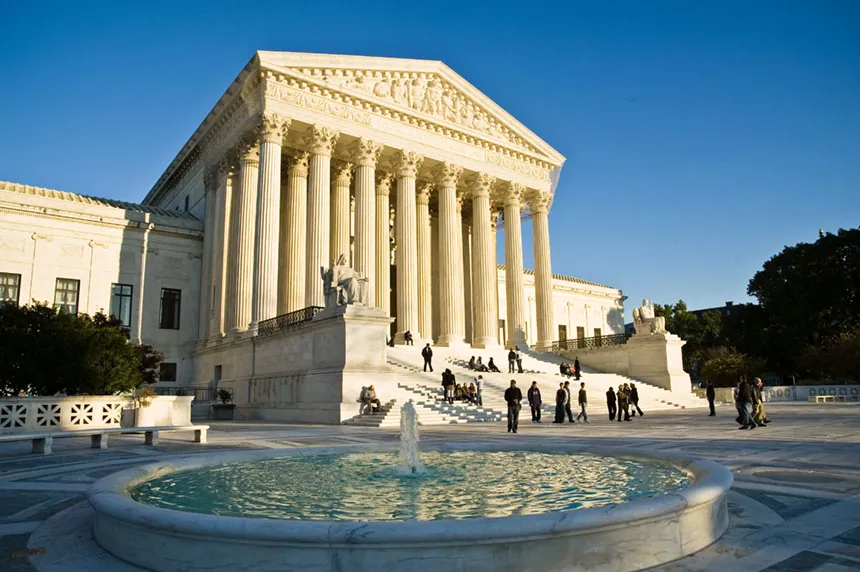
The Supreme Court has never issued one decision that settles every question about the death penalty. Instead, it has built a long and often uneasy body of law: first stopping the arbitrary systems then in use, then allowing revised systems to resume, then placing limits on who may be executed and who must make the facts that open the door to a death sentence.
That history matters in Western New York. New York state courts do not have a working death penalty, but federal law is separate. A federal capital case can still be heard in Buffalo. These decisions help explain why a national constitutional debate can become a local question about justice, public safety, grief, and the power of government.
This guide covers the major Supreme Court cases people most often encounter when trying to understand modern capital punishment. It is not every decision in the field. It is a practical map of the rulings that changed the legal landscape most clearly.
How to read the cases
The modern death-penalty cases answer three different questions: Can a death-penalty system operate at all? Who may not be executed? And what must a jury, judge, or prosecutor do before a death sentence is allowed?
Keeping those questions separate makes the cases easier to follow. A ruling may leave capital punishment legal in some circumstances while still forbidding it for a particular group of people. Another ruling may not decide whether death is a proper punishment at all; it may instead decide who must find a fact that makes death available in a particular case.
The Eighth Amendment's ban on cruel and unusual punishments is central to many of these decisions. The Sixth Amendment right to a jury trial is central to others. TheCornell Legal Information Institute's overview of death-penalty law is a useful reference for the wider legal framework, but the cases below show how the Court reached the rules people still debate today.
The most important point is that legal procedure and the larger moral question are not the same thing. A court can decide whether a jury instruction was constitutional without deciding whether execution makes a community safer, honors victims, or can be administered without unacceptable error. Those are questions the public must continue to confront.
Furman v. Georgia (1972): the death sentences that could not stand
Furman v. Georgia is the starting point for modern death-penalty law. In 1972, the Court set aside the death sentences in the cases before it. The result created a nationwide pause because the sentencing systems then in use gave decision-makers too much unguided discretion.
The Court issued a short unsigned judgment, while each of the five justices in the majority wrote separately. That means Furman is not a simple one-rule case. But its practical message was unmistakable: a system that allowed death to be imposed in a rare, uneven, and unexplained way could not continue as it was. The Court was concerned with arbitrary outcomes, including the risk that similar crimes could lead to radically different punishments for reasons the law could not justify.
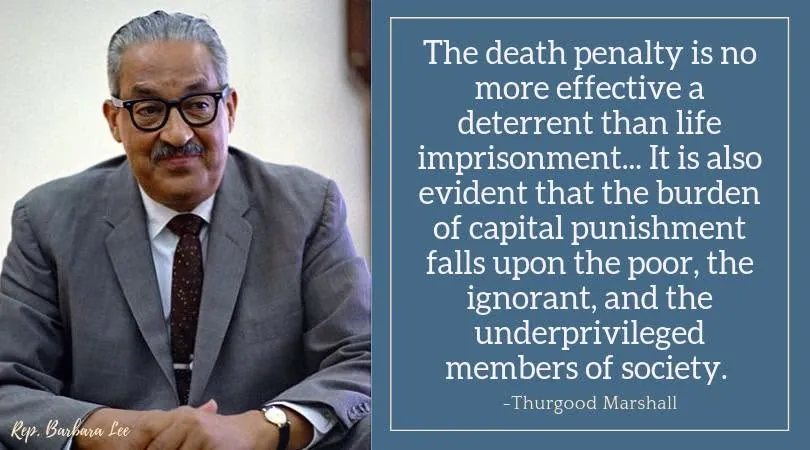
Two justices, William Brennan and Thurgood Marshall, concluded that the death penalty itself violated the Constitution. Other justices in the majority focused on the arbitrary way it was being imposed. That difference matters because the Court did not announce that every death sentence would always be unconstitutional. It held that the systems before it had failed a constitutional test.
States responded quickly. Some lawmakers tried to remove discretion by making death mandatory for certain murder convictions. Others tried to write detailed rules for capital sentencing. The next major group of Supreme Court decisions tested those competing answers to Furman.
Gregg v. Georgia (1976): the restart, with rules
Four years later, Gregg v. Georgiaheld that the death penalty was not automatically unconstitutional for murder. The Court upheld Georgia's revised law, which separated the guilt decision from the sentencing decision, required a finding that made a person eligible for death, allowed evidence supporting mercy, and provided appellate review.
The goal was to avoid the uncontrolled choice that concerned the Court inFurman. In a guided-discretion system, the law first narrows the group of cases in which death may be considered. A jury then hears aggravating evidence from the prosecution and mitigating evidence about the person and circumstances before deciding whether death should be imposed. Eligibility and selection are different steps, and both have produced decades of litigation.
Gregg did not approve a return to every pre-1972 practice. It treated procedure as essential. The Court expected rules, individualized consideration, and review to reduce the risk that a death sentence would rest on passion, prejudice, luck, or an unexamined impulse. The coalition's earlier guide to Gregg v. Georgia explains those features in more detail.
For supporters, Gregg showed that carefully written rules could preserve capital punishment. For opponents, it began a new question: whether rules can truly make an irreversible punishment fair when legal representation, evidence, race, geography, and the human judgments of jurors can vary so sharply from case to case.
Woodson v. North Carolina (1976): death cannot be automatic
On the same day as Gregg, the Court decided Woodson v. North Carolina. North Carolina had responded to Furman with a mandatory death penalty for first-degree murder. The Court rejected that approach. A murder conviction alone could not automatically decide that a person must die.
Woodson matters because it shows the tension at the heart of capital sentencing. Too much unguided discretion risks arbitrary outcomes. But a rule that removes all individual consideration is also unconstitutional. The Court required an individualized look at the person and the offense before a death sentence could be imposed.
Mitigating evidence is part of that individualized process. It does not erase the harm of a crime or excuse a person from responsibility. It gives a jury the fuller human record that a decision between life and death demands: background, character, mental state, role in the offense, trauma, and other circumstances that may bear on moral culpability.
Atkins v. Virginia (2002): a limit for intellectual disability
In Atkins v. Virginia, the Court held that the Eighth Amendment prohibits executing people with intellectual disabilities. The decision reversed an earlier ruling and relied on what the Court described as an emerging national consensus, along with the reduced culpability and heightened risk of unfairness in capital proceedings involving people with intellectual disabilities.
The ruling did not end the need for careful legal work. States still had to apply the constitutional rule in individual cases, and later decisions examined whether state methods for identifying intellectual disability were too narrow. But the central limit is clear: a death sentence cannot constitutionally be imposed on a person who has an intellectual disability.
Atkins is important beyond its specific category because it reflects how death-penalty law has developed. The Court has sometimes asked not only whether a procedure is fair, but whether a particular application of death is consistent with human dignity and evolving standards of decency. That approach has shaped other categorical limits as well.
Roper v. Simmons (2005): no death penalty for crimes committed under 18
Roper v. Simmons held that the Eighth Amendment bars the death penalty for a crime committed before a person turned 18. The decision replaced an earlier rule that had allowed some 16- and 17-year-old offenders to be sentenced to death.
The Court pointed to three broad differences between young people and adults: immaturity and an underdeveloped sense of responsibility, greater vulnerability to outside pressures and negative influences, and a character that is still forming. The Court concluded that those differences make it unreliable to identify juvenile offenders as among the most culpable people for whom death could be justified.
The point is not that a serious crime committed by a young person causes less harm. It is that constitutional punishment must account for culpability as well as harm.Roper remains a major example of the Court placing a categorical limit on execution rather than leaving the question to a case-by-case sentencing decision.
Kennedy v. Louisiana (2008): death is generally limited to crimes involving a death
In Kennedy v. Louisiana, the Court held that the death penalty is unconstitutional for the rape of a child when the crime did not result, and was not intended to result, in the victim's death. The ruling addressed an offense of devastating harm. It did not minimize that harm. It instead drew a constitutional line around when the state may impose its most severe punishment.
The decision is often summarized too broadly. It did not announce that death is unavailable for every crime that does not involve a homicide. The Court discussed offenses against the state, such as treason, separately. But for crimes against an individual where no death occurred, the Court concluded that capital punishment was disproportionate.
This is another reminder that a death-penalty case is not simply about whether an offense is terrible. The constitutional question often asks whether the punishment is proportionate, whether the person belongs to a group the law protects from execution, and whether the required sentencing process was followed.
Ring v. Arizona and Hurst v. Florida: the jury must find death-eligibility facts
Ring v. Arizona held that a judge cannot make the factual finding that increases a defendant's maximum punishment from life to death. If an aggravating circumstance is required before a death sentence can be imposed, a jury must find that fact.
The decision rests on the Sixth Amendment right to a jury trial. It distinguishes between a sentencing choice and a fact that legally makes the harsher sentence available. A judge may play important roles in a criminal case, but the Constitution requires a jury to find the aggravating fact that turns a murder conviction into a death-eligible case.
Hurst v. Florida applied that principle to Florida's capital-sentencing system. Florida had allowed a judge to make the final factual findings necessary for death after receiving a jury recommendation. The Court found that system unconstitutional because the jury had not made the required death-eligibility finding.
These cases do not answer every question about a jury's role. Courts have continued to decide how the rules apply to particular sentencing systems. But Ring andHurst underscore a basic point: the procedure surrounding a death sentence is not a technical afterthought. A constitutional error in who found a key fact can decide whether the sentence itself can stand.
What the cases have not resolved
These decisions created rules, but they did not end the central disputes surrounding capital punishment. The Court has allowed some systems to operate while repeatedly deciding new questions about eligibility, jury instructions, evidence, representation, lethal-injection methods, and review. That history is itself revealing: a punishment that cannot be repaired after it is carried out depends on extraordinary accuracy at every step.
The cases also do not settle whether the death penalty deters violence, whether it is applied equally across race and wealth, whether it helps survivors heal, or whether public money is better spent on prevention and support. Legal permission is not the same as public wisdom. A constitutional floor is not a moral ceiling.
The coalition's death penalty fact sheetbrings together sourced information on innocence, race, cost, deterrence, current death-row trends, and New York's history. It is a useful companion to court cases because it shows the lived consequences that cannot be captured by a citation alone.
For people who favor capital punishment, the modern cases can look like a demanding framework meant to make the system careful. For people who oppose it, the same cases can show why the system is beyond repair: every safeguard depends on human judgment, and no appeal can undo an execution. The coalition takes the latter view while recognizing that honest public discussion must confront the harm that serious violence causes.
A short timeline of the modern cases
It helps to see the cases as a sequence rather than as isolated names. In 1972,Furman stopped the death sentences then in force because the systems allowed arbitrary outcomes. In 1976, Gregg approved a revised guided-discretion model, while Woodson rejected mandatory death sentences. Those decisions created the framework that still shapes most legal arguments about capital punishment.
The Court then spent decades deciding the edges of that framework. It considered what aggravating factors can make a person eligible for death, what mitigating evidence a jury must be allowed to hear, what methods of execution may be challenged, and how state courts must review capital sentences. The legal record is long because capital cases are not ordinary sentencing cases. Each procedural step can carry permanent consequences.
In the 2000s, the Court announced several major categorical limits. Atkinsbarred executions of people with intellectual disabilities. Roper barred executions for crimes committed by people under 18. Kennedy limited the use of death for crimes against an individual when no death occurred. At the same time,Ring and later Hurst strengthened the jury's constitutional role in finding the facts that make a person eligible for a death sentence.
The result is not a straightforward path toward certainty. It is a legal system in which the Court has repeatedly had to correct, limit, or revisit procedures meant to govern the most severe punishment. That pattern matters for anyone who hears that the death penalty is reserved only for the “worst of the worst.” The phrase sounds simple. The cases show how difficult it is for law to define, prove, and apply that claim in a consistent way.
What these rulings mean during a capital case
A capital case usually has several stages, and different Supreme Court decisions matter at different points. At the charging stage, the law must identify an offense for which death may be sought. A murder charge alone does not automatically mean that death is legally available. In federal cases, prosecutors also follow a separate Justice Department review process before seeking a death sentence.
At trial, a jury first decides guilt. If the law permits a capital sentencing phase, the case then moves to a separate decision about punishment. This is where theFurman and Gregg legacy appears: the law tries to identify aggravating circumstances that narrow the class of cases eligible for death while allowing the defence to present mitigating evidence that argues for life instead.
Ring and Hurst are especially important at that stage. They require a jury, rather than a judge acting alone, to find the aggravating fact that makes death legally available. A jury's recommendation, a judge's role, and the exact wording of a state or federal statute can all become important because the Constitution does not allow a court to treat the death-eligibility finding as a minor detail.
The categorical cases work as another safeguard. Before a death sentence can stand, the law must respect the limits in Atkins, Roper, andKennedy. A court cannot simply say that a crime was severe and move forward. It must ask whether the person and offense fall within the constitutional boundaries the Supreme Court has set.
Even after a sentence, the case may be reviewed for legal errors. Appeals can examine jury instructions, evidence, counsel, sentencing findings, and constitutional claims. That review is essential, but it also exposes a hard reality: a system that requires repeated review to prevent irreversible mistakes places enormous weight on every lawyer, judge, juror, investigator, and recordkeeper involved.
Why simple summaries can mislead
It is common to see a case reduced to one sentence: Furman “abolished” the death penalty, Gregg “brought it back,” or Roper “banned juvenile execution.” Those summaries are useful starting points, but they can hide the legal and human complexity that follows. Furman did not declare that execution was always unconstitutional. Gregg did not promise that new procedures would make every capital sentence fair. Roper did not excuse serious harm caused by young people; it established a constitutional limit on punishment.
The same caution applies to terms that sound technical. An “aggravating circumstance” is not simply a description of a terrible crime. It is a legally defined fact that can make death available under a particular statute. “Mitigation” does not mean denying responsibility. It means giving decision-makers information they need before choosing an irreversible punishment. And “guided discretion” does not mean a system has eliminated discretion; it means the system is trying to channel it through rules.
Careful language matters in public conversation because the death penalty is often discussed through shorthand, fear, and headlines. A person can oppose execution without minimizing violence. A person can recognize the need for accountability while asking whether accountability must include state killing. Clear legal context makes those conversations more honest and gives communities a better chance to focus on safety, survivors, prevention, and repair.
Why these rulings matter in New York and Buffalo
None of these Supreme Court cases means that New York state courts can impose a death sentence today. New York's modern state statute became unusable after the Court of Appeals decision in People v. LaValle, and the final remaining state death sentence was vacated in 2007. The coalition's New York law timeline explains why both dates matter.
Federal law is different. Certain federal charges can be death-eligible, and federal prosecutors may seek a death sentence through a separate legal process. That is why a federal capital case can be heard in Buffalo even though New York state courts do not use execution. The coalition's guide to whether someone can get the death penalty in New York walks through that distinction in plain language.
For a community following a federal case, the Supreme Court decisions are not remote history. They shape who may face death, what factual findings a jury must make, how sentencing works, and which constitutional arguments can be raised. They also bring a difficult public question close to home: whether accountability requires execution when life without parole can protect the public without giving the government the power to kill.

How the coalition helps
WNY Coalition Against the Death Penalty helps Western New Yorkers turn complicated legal history into a conversation they can use. Students, educators, faith communities, reporters, and neighbors should not have to decode a stack of court opinions before they can understand what is happening in their own community.
The coalition offers facts, local context, and ways to keep the conversation grounded in dignity and public safety. Use the classroom discussion guide,invite a speaker, or reach out through the Contact page to bring this conversation to a class, congregation, civic group, or community gathering.
Frequently asked questions
Did the Supreme Court abolish the death penalty?
No. In Furman v. Georgia, the Court invalidated the death sentences before it because the existing systems allowed arbitrary outcomes. Four years later, Gregg v. Georgia held that the death penalty was not unconstitutional in every murder case and approved revised sentencing procedures.
What is the most important death penalty Supreme Court case?
Furman v. Georgia and Gregg v. Georgia are the two decisions that define the modern era. Furman stopped the death sentences then in force, and Gregg allowed some revised statutes to resume capital sentencing. Later cases added important limits on who can be executed and how the necessary findings must be made.
Can someone under 18 receive the death penalty?
No. Roper v. Simmons held that the Eighth Amendment bars the death penalty for a crime committed before a person turned 18.
Can a person with an intellectual disability be executed?
No. Atkins v. Virginia held that the Eighth Amendment prohibits executing people with intellectual disabilities. Later decisions have addressed how states apply that constitutional rule.
Do these Supreme Court decisions mean New York has a state death penalty?
No. New York state courts do not have a working death penalty. Supreme Court capital-punishment decisions still matter locally because federal law is separate and a federal capital case can be heard in New York.
Sources used in this article
This guide draws on the opinions in Furman v. Georgia, Gregg v. Georgia, Woodson v. North Carolina, Atkins v. Virginia, Roper v. Simmons, Kennedy v. Louisiana, Ring v. Arizona, and Hurst v. Florida, as well as Cornell Law School's Constitution Annotated overview of post-Furman limits.
Related reading

New York Death Penalty Law
Does New York Have the Death Penalty?
New York does not have a working state death penalty, but federal prosecutors can still seek death in federal cases. Here is the difference.
The New York Times
New York Times Review: Why the Death Penalty Is Dying
A curated reading note on Anand Giridharadas's review of Maurice Chammah's Let the Lord Sort Them and what it adds to the abolition conversation.

The New York Times
I Wish the Jury Had Not Sentenced My Family’s Killer to Death
A New York Times guest essay by Rev. Sharon Risher on grief, healing, and why an execution did not bring her family peace.