Death Penalty Action
A national partner focused on stopping executions through advocacy, education, and public action.
Visit Death Penalty Action WNY Coalition Against the Death Penalty
Community Partnership
Connect your school, faith community, civic group, or nonprofit with a local coalition working for safety, accountability, and healing without execution.
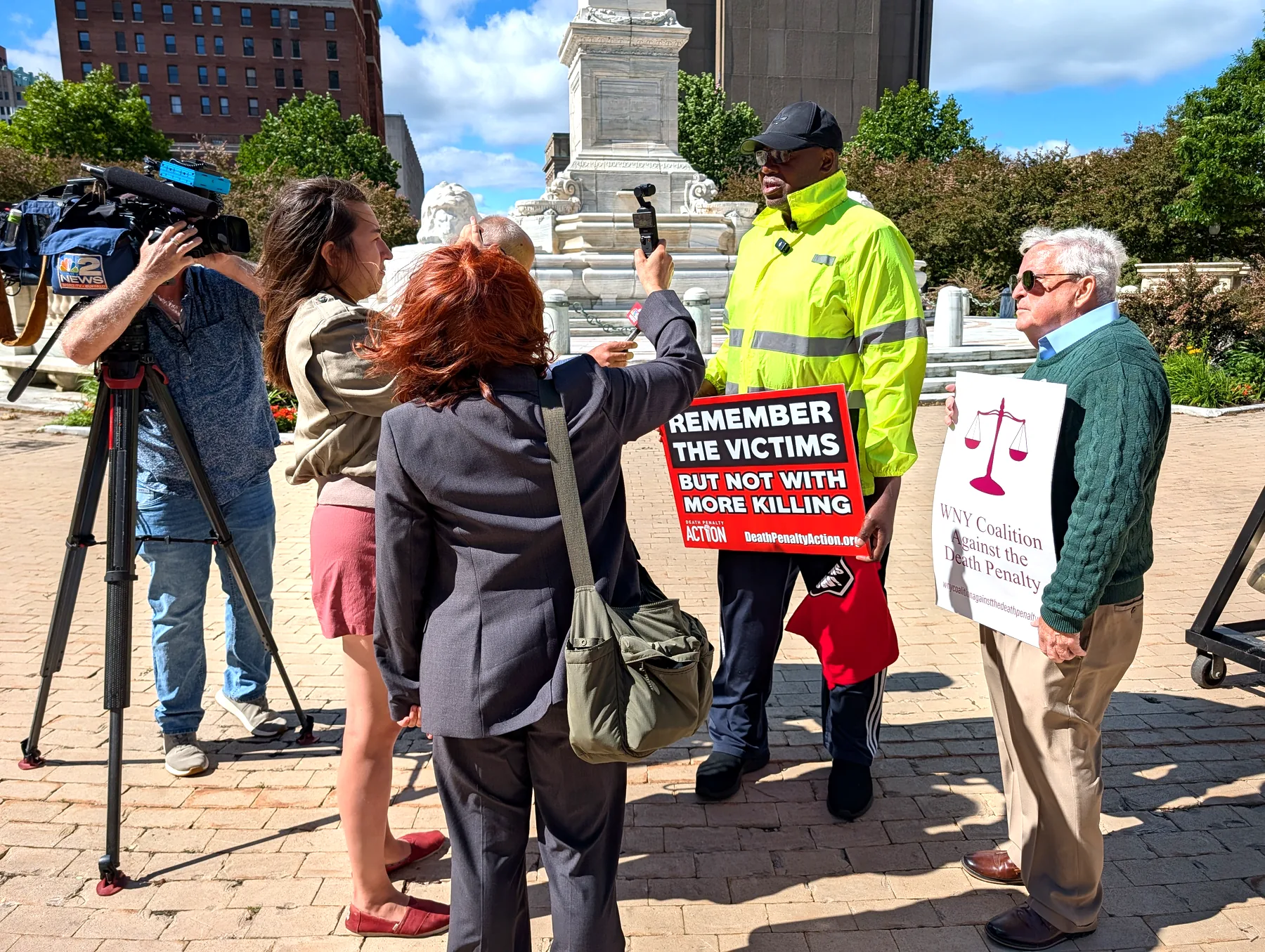
A Local Network
The WNY Coalition Against the Death Penalty brings together people and organizations who want accountability, safety, and healing without execution. The coalition gives local groups a place to begin when they want to understand capital punishment, respond to the federal case in Buffalo, or bring a more humane public voice into their community.
Start locally, then use these national organizations and research sources when your group needs a wider network.
A national partner focused on stopping executions through advocacy, education, and public action.
Visit Death Penalty ActionA national coalition connecting organizations that are working to end capital punishment in the United States.
Visit The U.S. CampaignA human rights organization that supports action to end the death penalty in every case.
Explore Amnesty's WorkA national source of data and analysis for people who need reliable context on capital punishment.
Explore Research And DataChoose The Right Starting Point
A school, congregation, neighborhood group, or nonprofit does not need to take on every part of the death penalty conversation at once. Some groups need help making sense of a case in the news. Others want to host a speaker, give members reliable material, or decide how to show public support without speaking beyond their experience. Starting with the need in front of your group makes the first step more honest and more useful.
Local education and relationship-building matter when the question is close to home. National advocacy organizations can help people follow wider abolition work and find opportunities for public action. Research organizations can give a group dependable context before it makes a statement, plans an event, or discusses law and policy. These roles work together, but they do not have to be handled by the same people or in the same meeting.
The coalition can help Western New York organizations decide where their own voice is most useful. A brief conversation about your audience, your immediate concern, and the kind of response you are considering is enough to identify a practical path. That may lead to a local learning session, a speaker request, a connection to a national partner, or a resource your group can use on its own.
It is also fine to begin small. A staff conversation, a book-group discussion, a classroom question, or a request for a short list of reliable materials can be the right first move. The point is not to create a program overnight. It is to help people respond with care, accurate information, and a next step they can genuinely sustain.
Choose the next step that fits your people, your purpose, and the conversation your community needs.
Bring a clear, local discussion about capital punishment to your congregation, campus, neighborhood group, or public forum.
Help members and neighbors understand New York law, the federal case in Buffalo, and the alternatives to execution.
Invite people into peaceful education, courthouse presence, and community action when the coalition calls for it.
Introduce the coalition to the people and groups in your community who care about justice, safety, and healing.
Start With One Conversation
National news can make the death penalty feel distant or abstract. In Western New York, a federal capital case has made the issue immediate for victims' families, neighbors, students, and faith communities. The coalition can help your group understand the difference between New York state law and the federal system, then decide what kind of conversation or public response is useful.
Connect Your OrganizationThese starting points help an organization move from concern to a useful local action.
Request a session for a class, faith community, civic group, or local forum.
Request A SpeakerStart with sources, discussion questions, and a classroom-ready structure.
View Lesson PlanHelp people find a realistic way to support local education and public witness.
Explore VolunteeringBuilt For Real Community Work
A strong partnership does more than fill a calendar. It helps a group leave with shared facts, better questions, and a practical way to stay connected. The coalition can point your members toward a classroom-ready lesson plan, a current fact sheet, local updates, and opportunities for peaceful public witness.
That approach works because it respects the people in the room. A school may need material that supports careful learning. A faith community may need space to discuss mercy, loss, and human dignity. A civic group may want clear context before it speaks publicly. The coalition helps each group begin from a place of care rather than assumption.
A Coalition, Not A One-Size-Fits-All Program
Some groups are responding to questions raised by the Buffalo case. Others are looking for a speaker, teaching resources, or a way to support a broader movement against capital punishment. There is no need to arrive with a finished event plan. A concise introduction to your group, your audience, and your goals is enough to identify a responsible next step.
The coalition's work is rooted in public education, community connection, and a belief that opposing execution does not mean ignoring violence or minimizing victims' grief. It means asking what safety, accountability, and healing require when the state has the power to take a life.
Faith communities, schools, colleges, neighborhood groups, civic organizations, advocates, and local nonprofits can contact the coalition about a conversation, resource, public action, or shared outreach.
No. The coalition can help a group begin with clear facts, local context, and a thoughtful way to discuss accountability, safety, grief, and human dignity.
Yes. Share your audience, goals, timing, and the kind of support you have in mind. The coalition can point you toward the clearest available next step.
Yes. Sharing trusted resources, introducing the coalition to another group, inviting volunteers, and staying connected to public education efforts are all useful ways to help.
Tell the coalition about your group, your idea, and the conversation you want to start.