Buffalo Death Penalty News

Defense Lawyers for Tops Mass Shooter Debate Jury Selections and Expert Evidence

Attorneys reviewed juror questionnaires and debated who should be excused ahead of an in-person selection process set for this summer.

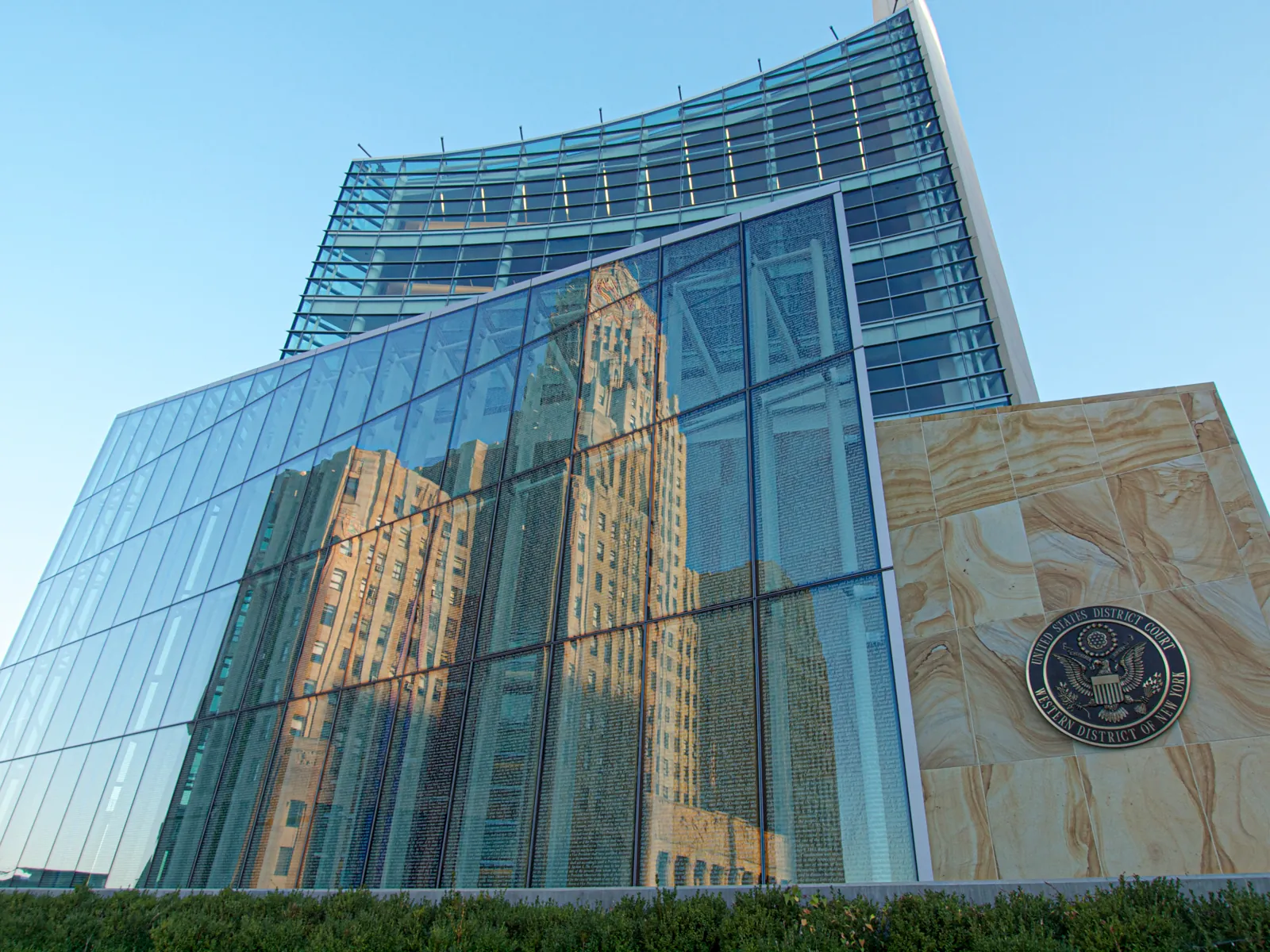
Jury selection took center stage Wednesday as lawyers for Payton Gendron appeared in federal court for a status conference. 

Gendron is already serving a sentence of life in prison without parole after pleading guilty in state court to the May 14, 2022 attack at the Jefferson Avenue Tops, where 10 people were killed. He now faces a separate federal trial in Buffalo, where prosecutors are seeking the death penalty.

During the hearing, a large focus was the jury selection process as the case moves toward a potential fall trial. Attorneys on both sides are reviewing responses from roughly 3,000 jury questionnaires sent to prospective jurors ahead of an in-person selection process expected to begin this summer.

Much of the discussion centered on who may ultimately be excused from service and who will be required to appear for further questioning.

Defense attorneys argued that certain categories of respondents including out-of-state students, caregivers for children with disabilities and small business owners should be examined more closely before being dismissed.

U.S. District Judge Lawrence Vilardo agreed that those individuals should be brought in for further questioning so they can explain in greater detail why they are seeking to be excused.

However, Vilardo drew a firm line regarding health care workers. He ruled that those who said jury service would interfere with patient care including doctors and nurse practitioners should be excused. He also said active medical students and residents would be removed from the jury pool, citing concerns about broader societal impacts if they were required to serve.

The judge indicated the court will likely revisit similar issues as additional questionnaire responses are reviewed in the coming weeks.

Also Wednesday, the defense was granted additional time to decide whether to present expert evidence regarding Gendron’s mental condition in a potential penalty phase. The court set a June 19 deadline for that decision, which is two months earlier than the Aug. 18 date the defense had requested.

Vilardo has previously said the trial will not begin before Oct. 13 and that jurors may need to remain available through at least January, underscoring the length and complexity of the proceedings.

Defense for Buffalo mass shooter to seek dismissal because grand jury lacked enough minorities

BUFFALO, N.Y. (AP) — Attorneys for the white supremacist gunman who killed 10 Black people at a Buffalo supermarket told a judge Thursday that the federal charges against him should be dropped because there weren’t enough Black people and other minority groups on the grand jury that indicted him. Payton Gendron did not attend the hearing, during which his lawyers argued that his constitutional rights to a grand jury drawn from a cross section of the community were violated.

At the hearing’s start, U.S. District Judge Lawrence Vilardo noted Gendron’s objection to the prevalence of white people on the panel seemed “a little incongruous” in the hate crimes case. He did not immediately rule on the motion.
Gendron could face the death penalty if convicted in the 2022 mass shooting at a Tops supermarket, which he targeted because of its location in a primarily Black neighborhood. Those killed ranged in age from 32 to 86. Three others were wounded. Gendron already is serving a sentence of life in prison without the possibility of parole
after pleading guilty in November 2022 to multiple state charges, including murder. A trial on the pending federal hate crime and weapons counts is expected to begin next year. The Justice Department said it would seek the death penalty if Gendron is found guilty.

Attorney John Elmore, who represents some of the victims’ relatives in lawsuits, said Gendron’s lawyers are doing what they can to keep him alive. He said challenges to the makeup of juries rarely succeed, even though he regularly sees juries lacking minorities. “It is very ironic that attention to this problem is being brought out in this case, where Payton Gendron committed a racially motivated homicide,” he said by phone after the hearing. “But this has been a persistent problem in our courts that needs to be addressed.” Gendron’s lawyers argued in a court filing that Black and Hispanic people and men are “systemically and significantly underrepresented” in the lists from which jurors are
selected in the Buffalo area.

“To illustrate this point, the grand jury that indicted Payton Gendron was drawn from a pool from which approximately one third of the Black persons expected and one third of the Hispanic/Latino persons expected,” Gendron’s lawyers wrote. Exacerbating the problem, they said, was that the data sources used by a vendor to pull the lists together
weren’t preserved. “We don’t know what the vendor did,” Assistant Public Defender Sonya Zoghlin said. “More importantly, the vendor doesn’t know what he did.”

Statistically, the addition of two more Black people on the 60-person grand jury panel would have balanced the panel, Vilardo said. “Can’t that be the result of an accident,” the judge asked, rather than systemic exclusion? In opposing the motion, Assistant U.S. Attorney Caitlin Higgins said that at worst, the issue constitutes a “technical violation,” not grounds to dismiss the indictment. The federal law governing jury selection “doesn’t entitle the defendant to a perfect
representation,” she said. Zoghlin said the issue was larger than the panel that ultimately heard Gendron’s case and included the exclusion of certain groups from the selection process, including inactive voters.

In a written filing, the U.S. Attorney’s office said Gendron didn’t prove a systematic underrepresentation that was caused by the district’s jury plan. Any disparities in the racial makeup were within accepted guidance, they wrote, and not caused by the selection process, which draws from voter, driver, tax, disability and unemployment rolls. Higgins said courts have routinely rejected similar challenges: Vilardo said he was unaware that any such motions had been granted in cases with similar disparities in New York state’s federal courts. Gendron’s attorneys, in an earlier filing, argued that Gendron should be exempt from the death penalty because he was 18 years old at the time of the shooting, an age when the brain is still developing. That motion is pending.

H.R. 262 (117th): Federal Death Penalty Prohibition Act

Federal Death Penalty Prohibition Act

Sen. Dick Durbin and Rep. Ayanna Pressley have joined forces once again in opposition to the federal death penalty.

The have reintroduced the Federal Death Penalty Prohibition Act.

The Federal Death Penalty Prohibition Act of 2026 would end the use of the death penalty by the federal government. Specifically, the bill would prohibit the imposition of the death penalty as punishment for any violation of federal law and require the re-sentencing of those previously sentenced to death row.

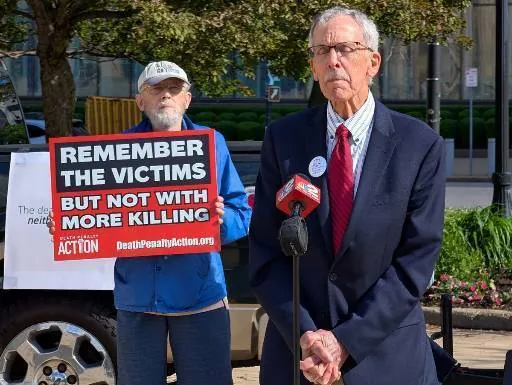
Our partners at Death Penalty Action advised: “With the executions in five states this week and last week, no other issue exemplifies the disintegration of the rule of law and a failure to protect the least among us like the death penalty in the United States in 2026. This is why now is exactly the right time for Congress to be called upon to fix what it can of this mess. Death Penalty Action is proud to stand with Representative Pressley yet again as she leads the effort to shine a spotlight upon the evils of capital punishment.” Abe Bonowitz, Director/Co-Founder of Death Penalty Action.

The New York Times Editorial Board Condemns Secrecy, Arbitrariness of U.S. Death Penalty

The New York Times editorial board published an article on March 13, 2026, condemning use of the death
penalty in the country as secretive, arbitrary, and unjust. Relying heavily on research and data maintained by
the Death Penalty Information Center, the board describes the events of 2025, with its sharp increase in
executions, as a ​“dark new period” in the nation’s history. The board attributes much of the surge to Florida,
which alone carried out 19 executions in 2025 alongside broader political and legal shifts and urges Americans
not to ​“look away” from what it calls a ​“cruel and unjust development.”

The editorial board argues that while the death penalty is theoretically reserved for ​“the worst of the worst,”
it is applied disproportionately against people who are poor, intellectually disabled, or inadequately
represented by counsel. The board points to research showing that defendants are more likely to be
sentenced to death when their victim is white, and highlights the cases of Anthony Boyd, executed in Alabama
based on disputed eyewitness testimony; Charles Flores, who has spent 27 years on Texas’ death row based
solely on testimony from a hypnotized witness; and Robert Roberson, whose conviction rested on now-
debunked evidence.

The board identifies four factors driving the increase in executions in 2025. First, nearly all states that have
conducted executions since 2012 have enacted secrecy laws limiting public insight into how executions are
carried out. Second, states have increasingly turned to alternative methods of execution — including the firing
squad — after pharmaceutical companies curtailed the sale of their drugs for use in lethal injection
executions. Third, the board argues that today’s Supreme Court make-up has become increasingly ​“indifferent
to the horrors of the death penalty.” While the Court issued several decisions in the 1980s through the early
2000s restricting its use, the board contends the more conservative majority has reversed course since 2020,
making it harder for capital defendants to introduce new evidence and declining to intervene in executions
with no explanation.

Fourth, the board points to President Donald Trump, whom it describes as an ​“enthusiastic” supporter of the
death penalty. Upon returning to office, President Trump issued an executive order encouraging states to
pursue the death penalty, and his embrace of the practice has, in the board’s view, led some elected officials
in the Republican Party to follow suit.

Emblematic of these shifts, the board notes that Florida Governor Ron DeSantis has exercised his broad
authority over who is executed, signing 24 death warrants since the beginning of 2025. Gov. DeSantis also
signed legislation in 2025 mandating the death penalty for undocumented immigrants convicted of capital
crimes, despite its direct violation of longstanding U.S. Supreme Court decisions that prohibit mandatory
death sentences for any category of crime.

The board also notes Alabama Governor Kay Ivey’s commutation of Charles Burton, 75, who had been
sentenced to death under the felony murder rule for a fatal 1991 robbery in which he didn’t pull the trigger.
He was scheduled to be executed just two days after Gov. Ivey’s announcement. While welcoming the
decision, the board cautioned ​“it should not require a wave of media attention and public outcry to secure
last-minute justice in every flawed case.”

In closing, the board calls for several reforms short of abolition: guaranteeing that those on death row have
every opportunity to present evidence challenging their convictions; urging the Supreme Court to uphold
existing protections in capital cases; reaffirming the Court’s 2008 ruling barring the death penalty for crimes
other than murder; and repealing state secrecy laws so the public can ​“confront the grim reality of
executions.” The board writes the willingness of so many states to hide that reality ​“offers one reason for
hope,” suggesting the those in support of capital punishment ​“seem to grasp that it is indefensible.”