
Supreme Court Case
Ring v. Arizona: Why a Jury Must Find the Facts for Death
Ring v. Arizona held that a jury, not a judge alone, must find the aggravating facts that make a person eligible for the death penalty.
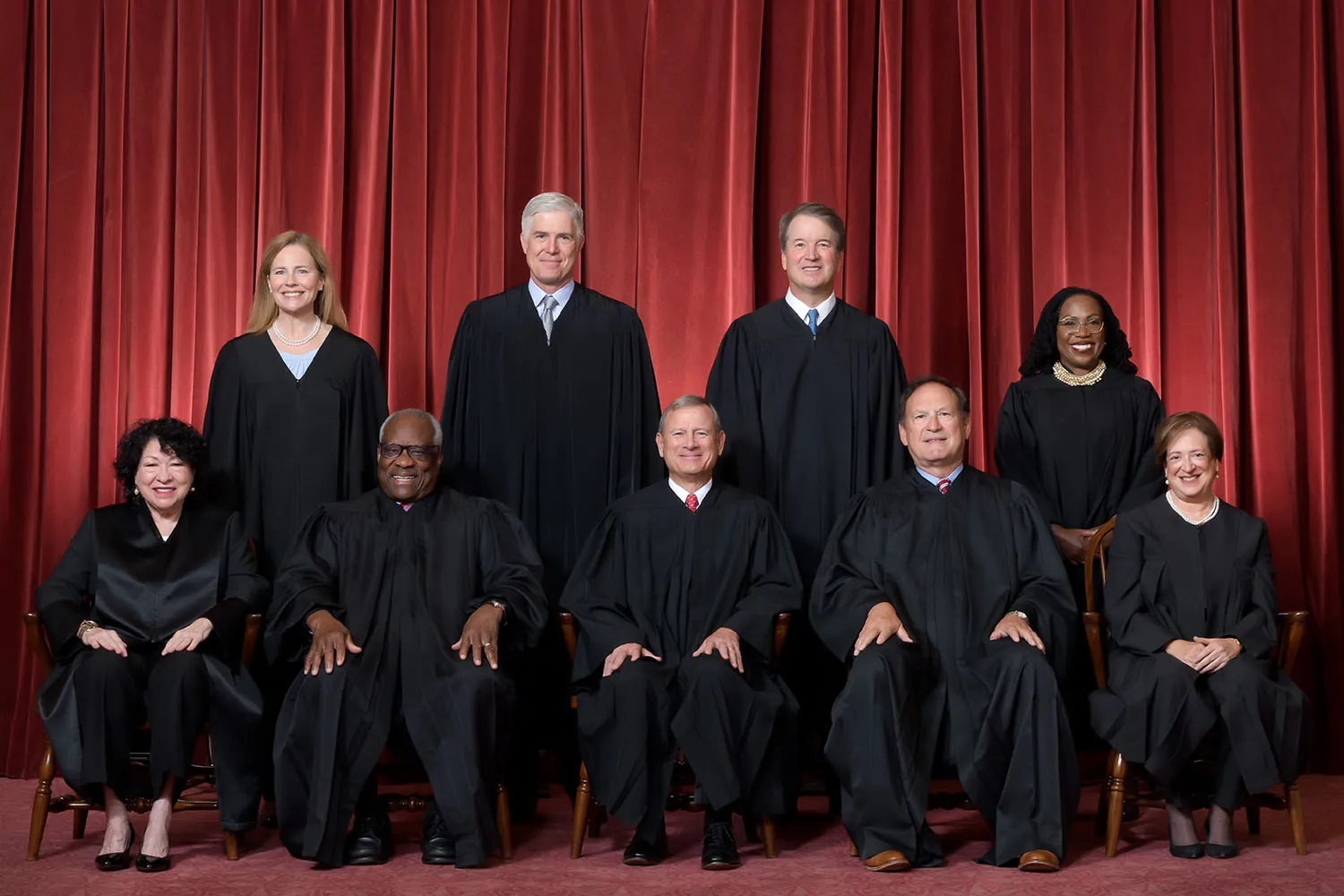
Ring v. Arizona is a Supreme Court case about a basic safeguard in capital sentencing: who must decide the facts that can turn a murder conviction into a possible death sentence. In 2002, the Court held that those facts belong to a jury, not to a judge acting alone.
The ruling did not minimize a serious crime or make a severe sentence impossible. It addressed the process that comes before an irreversible punishment. When a state makes death possible only after certain additional facts are found, the Constitution requires the community jury to make those findings beyond a reasonable doubt.
The short answer
Ring v. Arizona held that a jury must find the aggravating circumstance required to make someone eligible for the death penalty. A judge cannot find that critical fact alone.
The Court decided the case on June 24, 2002. Its official published opinion explains that Arizona’s law allowed a judge to find the aggravating facts needed for death after a jury had returned a murder verdict. The Court concluded that those facts were functionally part of a more serious offense because they increased the punishment the person could receive.
How the case reached the Court
Timothy Ring was convicted of felony murder in Arizona. Under the state’s capital-sentencing system at the time, the verdict alone did not permit a death sentence. A separate hearing followed, and a judge, without a jury, decided whether the prosecution had proven one of the aggravating circumstances listed in the statute.
The judge found such circumstances and imposed a death sentence. Ring challenged that process under the Sixth Amendment right to a jury trial. The question was not whether a sentencing hearing could occur. It was whether the fact that opened the door to execution could be found by one judge instead of by a jury.

What the Court decided
In a 7-2 decision, the Supreme Court ruled for Ring. It explained that labels do not control the constitutional question. Arizona called its aggravating circumstances sentencing factors, but a defendant could not receive death without them. That made them the functional equivalent of an element that had to be found by a jury.
The rule follows the Court’s earlier decision in Apprendi v. New Jersey: when a fact increases the maximum punishment the law allows, a jury must find it beyond a reasonable doubt. In a capital case, an aggravating fact can be the difference between a sentence that ends in prison and one that ends in execution. The Court held that this distinction makes the jury’s role essential.
Ring overruled the part of an earlier case, Walton v. Arizona, that had allowed a judge alone to make the required eligibility finding. The decision did not say a jury must choose death in any particular case. It said the jury must make the factual finding that makes death legally available in the first place.
Why the difference matters
Capital sentencing has often been described as a system of safeguards. Ring asks who holds one of the most important safeguards. A jury brings multiple people into the process, applies the reasonable-doubt standard, and must reach the finding required by law. That does not eliminate error, bias, or disagreement. It does prevent a single official from making the factual decision that changes the maximum possible punishment to death.
This is a question of reliability as well as procedure. A death sentence cannot be undone. The Coalition’s guide to Caldwell v. Mississippi explains a related principle: jurors cannot be led to believe someone else will take responsibility for the life-or-death choice. Together, the cases show how much weight the Constitution places on a jury’s role in a capital case.
What Ring did not decide
Ring did not abolish capital punishment. It did not decide whether any individual deserved death, and it did not guarantee that a jury system will produce fair results. The ruling was narrower but important: when the law makes execution depend on an aggravating fact, the Sixth Amendment protects the right to have a jury find that fact.
Later cases continued to address how this rule applies. In Hurst v. Florida, the Supreme Court held that Florida could not leave the critical factual findings to a judge after a jury gave only an advisory recommendation. These rulings set constitutional boundaries, but they do not resolve every question about fairness, race, cost, innocence, or whether execution makes communities safer.

How Ring fits into death penalty law
Ring belongs in the modern line of Supreme Court decisions that tried to constrain an extraordinary punishment. In Furman v. Georgia, the Court invalidated the death sentences then before it because existing systems allowed arbitrary outcomes. In Gregg v. Georgia, the Court allowed some revised statutes with procedures intended to narrow capital sentencing.
Ring focuses on one of those procedures: the jury finding. Its lesson is straightforward. If the government seeks the most permanent punishment it has, it cannot treat the facts needed for that punishment as a minor detail for a judge to decide alone. For a broader map of these rulings, read the Coalition’s guide to Supreme Court death penalty cases.
Why this still matters in Western New York
New York has no working state death penalty. The state’s highest court made the state statute unusable in 2004, and the last state death sentence was vacated in 2007. Federal law is separate, however. In limited federal cases, a death sentence may still be sought in New York. The Coalition’s New York death penalty guide explains that state-federal distinction.
That is why national constitutional rules can matter in a Buffalo courtroom. They do not answer every local question, but they establish limits on the power to seek and impose death. For students, journalists, faith communities, and neighbours following a federal case, Ring offers a useful starting point: identify the facts the law says are required, then ask who had the authority to find them.
The Coalition supports accountability without execution. Life without parole is a severe punishment that can protect the public without making an irreversible decision depend on a process that human institutions cannot make flawless. The Coalition’s fact sheet collects further sourced information about wrongful convictions, cost, race, deterrence, and death-row trends.
How the Coalition can help
Complex court decisions can sound remote until they affect a community conversation. The Coalition’s education resources and speaker program help classrooms, faith groups, and community organisations discuss capital punishment with clear context and room for serious questions.
Readers can also explore Questions of Fact or find a way to participate through Get Involved. Taking violence seriously and questioning execution are not opposing commitments. They are part of asking what kind of justice can protect people, respect human dignity, and remain open to correction.
Frequently asked questions
What did Ring v. Arizona decide?
The Supreme Court held that a jury must find any aggravating fact required to make a person eligible for the death penalty. A judge cannot make that finding alone.
Did Ring v. Arizona abolish the death penalty?
No. The decision addressed who must make the factual findings required before a death sentence may be imposed. It did not declare the death penalty unconstitutional in every case.
What is an aggravating factor?
It is a fact defined by a capital-punishment law that makes a murder eligible for a possible death sentence. Examples vary by jurisdiction and can include circumstances about the crime or the victim.
Why does Ring matter in New York?
New York has no working state death penalty, but federal capital law is separate. Constitutional rules for jury findings still matter if a federal death sentence is considered in New York.
Sources used in this article
This guide draws on the official United States Reports opinion in Ring v. Arizona, the Coalition’s Supreme Court cases guide, and its linked resources on New York law and accountability without execution.
Related reading
New York Death Penalty Law
Caldwell v. Mississippi: The Jury’s Role Explained
Caldwell v. Mississippi held that a death sentence cannot rest on arguments that make jurors feel less responsible for deciding whether a person lives or dies.
New York Death Penalty Law
Furman v. Georgia: What Did the Court Decide?
Furman v. Georgia stopped death sentences under the laws then in force because the Court found arbitrary punishment. Here is what the 1972 ruling did and did not decide.
New York Death Penalty Law
Death Penalty Supreme Court Cases: A Guide
The major Supreme Court decisions on capital punishment, from Furman and Gregg to the limits the Court later placed on who can be executed.