
Supreme Court Case
Kennedy v. Louisiana: What the Court Decided
Kennedy v. Louisiana barred the death penalty for child rape when the victim did not die and death was not intended. Here is what the 2008 ruling means.
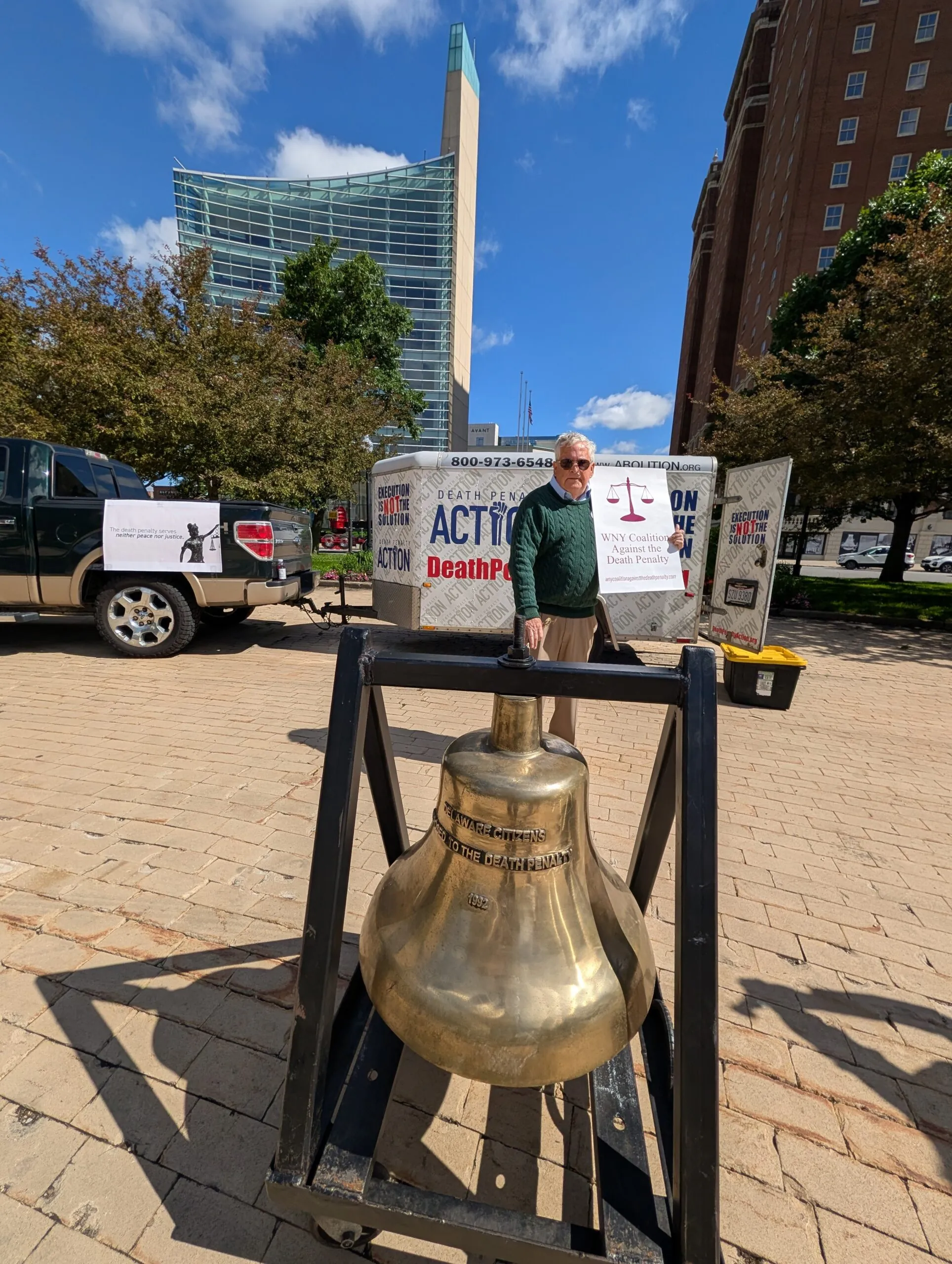
Kennedy v. Louisiana is the Supreme Court decision that set a constitutional limit on the death penalty for a non-homicide crime against an individual. In 2008, the Court ruled that a state may not execute a person for the rape of a child when the victim did not die and death was not intended. The decision addressed a profoundly serious crime without treating the severity of harm as a reason to abandon constitutional limits.
That distinction is the point of the case. The Court did not say that child rape is a minor offense, that survivors do not deserve support, or that a person convicted of the crime should avoid punishment. It held that death is a disproportionate punishment for this category of crime. A state can prosecute, incarcerate, and impose a severe sentence. It cannot use execution in these circumstances.
The short answer
In a 5–4 decision, the Supreme Court held that the Eighth Amendment bars the death penalty for the rape of a child when the crime did not result in, and was not intended to result in, the child’s death. The ruling concerned non-homicide crimes against individuals, not murder.
The official United States Reports record identifies the case as Kennedy v. Louisiana, 554 U.S. 407, decided June 25, 2008. The Court’s rule is categorical. It does not ask a jury to decide whether one specific non-homicide offense feels especially brutal. It removes execution as a sentencing option for the class of cases the decision describes.
That is different from a lighter sentence. A constitutional bar says the government may not use a particular punishment, even after a grave crime and even when the public response is understandably anguished. The Court treated proportionality as a limit on state power, not as a measure of how much a survivor’s harm matters.
How the case reached the Court
Patrick Kennedy was convicted under a Louisiana law that allowed a death sentence for the aggravated rape of a child under 12. The victim survived. A jury imposed death, and the Louisiana Supreme Court upheld the sentence. The question before the United States Supreme Court was not whether Louisiana could punish rape severely. It was whether the Eighth Amendment allowed execution for that crime when it was not a homicide.
Louisiana argued that the distinctive vulnerability of child victims and the seriousness of the harm supported the sentence. Kennedy argued that the Court’s earlier decision in Coker v. Georgia already established that death was disproportionate for rape where the victim lived, and that a small number of state statutes did not show broad national acceptance of execution for child rape.
The Court had to confront a difficult truth without looking away from it: a crime can cause lasting and devastating harm, while execution can still exceed the constitutional limit on punishment. That is why this case is useful in a classroom or public discussion. It makes clear that accountability and constitutional restraint are not opposites.
What the Court decided
The majority held that the Eighth Amendment prohibits a state from imposing the death penalty for the rape of a child where the crime did not result, and was not intended to result, in death. In reaching that conclusion, the Court considered state legislation, actual use of the punishment, its earlier cases, and its own judgment about proportionality.
The opinion emphasized that the death penalty must be limited to the most serious offenses and offenders. Murder is different in the Court’s analysis because it takes a life. For a non-homicide crime against an individual, the majority concluded, execution is not a proportional response under the Eighth Amendment.
The Court did not hold that every non-homicide offense has the same legal analysis. It expressly confined its holding to crimes against individuals and did not decide how military law should be treated. That detail matters. A careful case summary should not turn a specific holding into a broader claim than the Court made.
Why Coker v. Georgia matters
Kennedy did not begin from scratch. In 1977, Coker v. Georgia held that a death sentence was disproportionate for the rape of an adult woman. Louisiana’s argument was that the age of the victim and the nature of the offense made child rape different. The Supreme Court disagreed that this difference allowed execution.
Together, the cases mark an important boundary in modern capital-punishment law. They show that the Constitution asks more than whether a crime is terrible or whether a state legislature has authorized a severe penalty. It also asks whether the punishment is proportionate and whether government power has crossed a line the Eighth Amendment will not permit.
That legal principle can feel abstract until it is stated plainly: serious punishment can recognize grave harm without copying the irreversible force of the violence it condemns. The Coalition’s guide to life without parole explains one severe alternative that permanently separates a person from the community without ending the possibility of correcting a wrongful conviction.
How to read a case like Kennedy
Supreme Court case names can create a false impression that one decision settles an entire public debate. They do not. A case answers a legal question presented by a particular record. Here, the question was whether Louisiana could execute a person for child rape when no death occurred or was intended. The Court’s answer establishes a constitutional rule for that question, while leaving other death-penalty questions to other cases and statutes.
It is also important to distinguish a holding from the reasons people give for supporting or opposing it. The majority relied on evidence of national practice, earlier proportionality decisions, and its own constitutional judgment. The dissent challenged that reasoning. Readers do not need to accept either side’s broader moral view to understand the holding accurately: execution was removed as a lawful punishment in the specific category of cases before the Court.
That habit of careful reading matters beyond a law classroom. Headlines often compress a complex ruling into a few words. A fuller account helps people avoid two damaging mistakes: assuming that a constitutional limit excuses a crime, or assuming that outrage over a crime automatically answers what punishment the Constitution permits. Both shortcuts leave less room for survivors, public safety, and fair legal judgment.
What the decision did not decide
Kennedy v. Louisiana did not abolish the death penalty. It did not rule on death sentences for murder, and it did not erase the Supreme Court’s earlier decisions that allowed some capital-sentencing systems to operate after Furman v. Georgia and Gregg v. Georgia.
It also did not settle every constitutional question involving non-homicide offenses. The opinion left open questions involving offenses against the State, including military law. Lawyers, journalists, and students should be wary of a shortcut that says the Court barred the death penalty for every crime other than murder. The actual holding is narrower, and accuracy is part of treating a difficult subject with respect.
Finally, the decision did not suggest that courts should minimize survivor needs. A justice system can respond to severe violence through investigation, fair trials, meaningful sentences, counseling and support for survivors, and community investment that prevents further harm. The legal question was whether execution was constitutional, not whether the crime deserved a serious public response.
The dissent and the public debate
Four justices dissented. They disagreed with the majority’s reading of the national evidence and argued that the Constitution did not impose a categorical bar in the circumstances before the Court. The dissent is important because it shows the legal disagreement directly: the justices did not dispute that child rape is grave, but they reached different conclusions about how the Eighth Amendment’s proportionality principle applies.
People can acknowledge the depth of the harm and still disagree about the death penalty. The Coalition’s position is that execution is not a measure of how seriously a community takes violence. It is a choice to give government a final, irreversible power. The more complex the legal rules and human judgments become, the more important it is to ask whether a justice system should have that power at all.
For a broader map of these decisions, read the Coalition’s guide to Supreme Court death penalty cases. It places Kennedy alongside rulings about arbitrary sentencing, intellectual disability, age, and jury findings.
Why the case still matters in Western New York
New York does not have a working state death penalty. The state’s highest court made the statute unusable in 2004, and the last remaining state death sentence was vacated in 2007. Federal law is separate, though, which means a federal capital case can still be heard in New York. The Coalition’s New York death penalty guide explains that difference in plain language.
That local context is why national Supreme Court decisions are not distant history. They set constitutional boundaries that matter whenever a federal prosecutor seeks death in a New York courtroom. They also give teachers, faith communities, and civic groups a grounded way to discuss a hard question: what does serious accountability require, and what should it never require?
The case supports a careful answer. We can recognize the gravity of violence, listen to survivors, and pursue safety without making execution the final word. A justice system earns trust not only by responding to harm, but also by holding itself to limits when the stakes are highest.
How the Coalition can help
WNY Coalition Against the Death Penalty helps Western New Yorkers turn legal history into informed conversation. The Coalition’s education resources and speaker program can support a classroom, faith group, or community discussion that needs reliable context and room for serious questions.
For groups using this case as a starting point, it helps to name the issue precisely: the question is not whether the harm was real, but what a just response can be when a sentence cannot be undone. That frame makes room for survivor support, public safety, and constitutional limits in the same conversation.
People who want to keep learning can explore the Coalition’s fact sheet, share a resource, or find a next step on the Get Involved page. Accountability without execution is not a refusal to care about harm. It is a commitment to protect people while leaving room for truth, fairness, and correction.
Frequently asked questions
What did Kennedy v. Louisiana decide?
The Supreme Court held that the Eighth Amendment does not allow a state to impose the death penalty for the rape of a child when the crime did not cause, and was not intended to cause, the child’s death. The decision did not excuse the crime or prevent severe prison sentences.
Did the decision apply to murder?
No. Kennedy v. Louisiana concerned a non-homicide offense. The Court’s ruling did not decide whether the death penalty is constitutional for murder, which remains governed by a different body of cases and statutes.
Does Kennedy v. Louisiana apply to military cases?
The Court expressly did not decide how its rule applies under military law. Its holding addressed state criminal law and a crime against an individual where no death occurred or was intended.
Why does this case matter in New York?
New York has no working state death penalty, but federal capital law is separate. The constitutional limits set by Supreme Court decisions still matter whenever a federal death sentence is considered in New York.
Sources used in this article
This guide draws on the official United States Reports decision in Kennedy v. Louisiana, the opinion text and syllabus, and the Coalition’s linked guides to Supreme Court cases, New York law, and accountability without execution.
Related reading
New York Death Penalty Law
Atkins v. Virginia: What the Supreme Court Decided
Atkins v. Virginia barred the execution of people with intellectual disabilities. Here is what the ruling decided, what it left to the states, and why it still matters.
New York Death Penalty Law
Furman v. Georgia: The 1972 Decision Explained
Furman v. Georgia stopped death sentences under the laws then in force because the Court found arbitrary punishment. Here is what the 1972 ruling did and did not decide.

Public Safety
What Is Life Without Parole? A Plain-Language Guide
Life without parole means a person remains in prison for life without a future parole hearing. Here is what that sentence does and does not mean.