
Public Safety
Does the Death Penalty Deter Crime? What Research Can Show
Research has not shown that executions reduce homicide. Here is what the evidence can and cannot tell us about deterrence and public safety.
People often ask whether the death penalty prevents murder. It is a serious question, especially after a violent crime has shaken a community. The clearest answer is also the most honest one: research has not shown that executions reduce homicide.
That does not mean public safety is unimportant. It means the public deserves more than a claim repeated during a painful news cycle. A death sentence is irreversible, expensive to pursue, and legally complex. Before treating it as a safety policy, it is reasonable to ask what evidence shows that it does something life without parole cannot do.
This guide explains what deterrence means, why it is difficult to measure, what a major scientific review concluded, and how Western New Yorkers can have a more useful conversation about accountability, safety, and the federal death-penalty case in Buffalo.
The short answer
There is no reliable evidence that the death penalty deters homicide. In 2012, a National Research Council committee concluded that existing research could not determine whether capital punishment decreases, increases, or has no effect on homicide rates.
The committee did not conclude that every individual study was useless. It found that the research methods then available could not separate the death penalty from the many other factors that affect a community's homicide rate. Its report, Deterrence and the Death Penalty, remains a central reference because it explains the limits of the evidence instead of overselling a result.
That distinction matters. Saying that research has not demonstrated deterrence is not the same as saying violence should be treated lightly. It is a call to judge public-safety policy by what can actually be shown to work, while keeping serious accountability in view.
What deterrence means
Deterrence is the idea that a threatened punishment prevents someone from committing a crime. In death-penalty debates, the claim usually takes one of two forms. One is that a person who is executed cannot commit another crime. The other is that other people will be less likely to commit murder if the state can execute someone convicted of it.
Those are different questions. A sentence of life without parole also prevents a person from returning to the public. The broader deterrence claim asks whether the possibility of execution changes the behavior of people who have not yet committed a crime. That is the claim researchers have tried, and struggled, to measure.
It can be tempting to treat the harshest punishment as the strongest deterrent. Human behavior is not that simple. Many murders occur during crisis, anger, trauma, intoxication, coercion, or other conditions where a person is not calmly comparing possible sentences. A policy cannot assume that a distant and rarely imposed punishment will guide a moment that is already out of control.

Why the research is difficult
Homicide rates move for many reasons. They can be shaped by the availability of firearms, neighborhood conditions, policing and clearance rates, access to mental-health and substance-use care, economic stress, community violence-prevention work, local laws, and changes in how crimes are reported. A study that notices a change in homicide after a legal change still has to show that the death penalty, rather than another force, caused it.
The death penalty is also used rarely and unevenly. States differ in their laws, prosecutors, court systems, death-sentence rates, delays, and execution practices. A state may retain capital punishment on paper while carrying out no executions for decades. That makes it difficult to compare one state with another as if the policy were a single, consistent treatment.
The National Research Council found that the studies it reviewed used methods that could not reliably account for those differences. A claimed effect may reflect a change in a single place or period, an assumption built into a statistical model, or ordinary variation rather than a result caused by executions. The committee's report makes the point plainly: the available research could not answer the causal question.
What the evidence does and does not say
The evidence does not support a confident claim that executions make communities safer. It also does not allow a reliable numerical claim that one execution saves a specific number of lives. When advocates, officials, or commentators present those promises as settled fact, they go further than the research can carry.
The evidence does say that deterrence is not a good reason to stop asking hard questions. If a community's goal is fewer murders, it should care about approaches with clearer evidence: preventing violence before it begins, supporting people in crisis, solving crimes fairly, and giving survivors lasting help rather than treating a sentence as the end of public responsibility.
This is not an argument that one policy can prevent every act of violence. It is an argument for intellectual honesty. A punishment that cannot be undone should not be defended with certainty where the research has found uncertainty.
The coalition's death penalty fact sheetincludes the same National Research Council finding alongside sourced information on innocence, racial disparity, cost, federal cases, and New York law. It is a useful starting point for readers who need a citable reference rather than a slogan.
Severity is not the same as certainty
A death sentence is the most severe punishment the government can impose. That severity can make it feel like an obvious deterrent. But a person considering violence is not necessarily weighing the harshest possible outcome in a calm, informed way. The more useful question is whether a person believes they will be stopped, identified, and held accountable at all.
That is one reason a simple comparison between death-penalty states and non-death-penalty states cannot settle the issue. The laws on the books are only one part of a much larger public-safety picture. What happens before a crime, during an investigation, in a courtroom, and after a conviction can vary dramatically from one place to another.
The National Research Council did not say that all punishments are irrelevant to behavior. Its conclusion was narrower and more useful: the available studies could not isolate the effect of capital punishment on homicide. That means the claim that execution deters murder has not cleared the evidentiary bar people should expect before relying on an irreversible state action.
This matters because public policy often rewards confident answers. “Tougher” can sound like “safer,” even when the connection has not been shown. A community can reject that shortcut while still insisting on careful investigation, fair consequences, and real protection for people at risk of harm.
What a public-safety conversation should include
The death-penalty debate can become too narrow when it asks only what should happen after a terrible crime. Prevention matters before a crime takes place. So do reliable emergency response, trauma-informed support, accountable policing, fair courts, violence-interruption work, and sustained care for survivors and neighborhoods after harm occurs.
These are not interchangeable programs, and no single approach can guarantee safety. They do, however, put attention on the conditions that can reduce harm rather than treating execution as a stand-alone answer. When public money and public attention are limited, it is reasonable to ask whether a lengthy capital prosecution advances safety more than approaches that address violence directly.
That broader frame also makes room for victims' families. People who have lost someone deserve more than a symbolic promise that the state will be severe. They may need financial support, counseling, stable housing, medical care, a trustworthy legal process, and a community that does not disappear after the cameras leave. Those needs are real whether a person supports execution, opposes it, or remains unsure.
A careful conversation can hold two truths at once: violence causes profound harm, and a policy must be judged by evidence rather than anger alone. That is the standard this question deserves.
It also helps to ask who carries the burden of a death-penalty case. Survivors may wait through years of hearings and appeals. Jurors are asked to make an irreversible moral decision. Court staff, lawyers, correctional workers, and prison medical personnel can all be drawn into a process that extends long after the original crime. Those costs do not answer every moral question about punishment, but they belong in an honest discussion of what a community gains and what it asks people to endure.
A public-safety policy should be able to explain its benefit plainly. If the benefit is deterrence, the evidence should show deterrence. If the benefit is accountability, the policy should explain why the severe accountability already available through life without parole is not enough. Asking those questions is not softness. It is a way to make sure a community's response to violence is guided by care, facts, and responsibility rather than the desire for a simple answer.
Accountability and public safety are not opposites
A person can oppose execution and still believe that serious violence requires serious accountability. Communities need accurate investigation, fair trials, consequences that protect the public, and long-term care for people harmed by violence. Those needs do not disappear when someone questions the death penalty.
Life without parole is already available in the most serious cases. It can keep a person in prison permanently without asking the state to carry out an execution. In New York, state courts do not impose death sentences, although federal law can still permit a capital case. The coalition's guide to the death penalty in New York explains that difference.
For victims' families, there is no single experience or single desired outcome. Some people support execution. Others have spoken publicly against it. A responsible public conversation makes room for grief and for disagreement without assuming that an execution is the only form of accountability a community can recognize.
Why this matters in Buffalo
Buffalo is living with the aftermath of extraordinary violence. That reality should make public discussion more careful, not less. The question is not whether the harm was grave. It is whether seeking an execution provides a demonstrated safety benefit beyond the severe punishment already available.
The federal case has made national policy feel local. New York's state death-penalty system does not operate, but a federal capital case can still be heard in Buffalo. Understanding that split helps neighbors follow the case without mistakenly believing that New York state law has brought executions back.
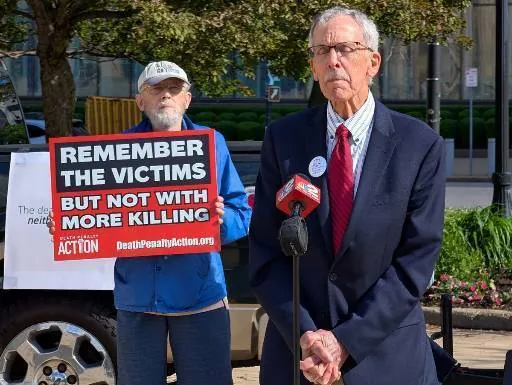
The coalition's role is to keep the question connected to the community that must live with its answer. That means looking beyond a single courtroom outcome and asking what helps Buffalo honor people who were harmed, prevent future violence, and refuse to confuse state killing with public safety.
People who want the legal background can start with the coalition's explanation of when New York's working death penalty ended. For a fuller look at the court decisions that shaped modern capital punishment, use the Supreme Court cases guide.
How the coalition helps
WNY Coalition Against the Death Penalty helps people bring evidence, local context, and humanity into a conversation that can otherwise become driven by fear or political theater. The coalition does not ask people to minimize harm. It asks whether public safety and accountability require an irreversible punishment that has not been shown to deter violence.
A class or campus group can use the lesson plan. A faith community or civic group can invite a speaker. To ask a question or connect a group with the coalition, visit Contact or Get Involved.
Frequently asked questions
Does the death penalty deter murder?
Researchers have not been able to establish a reliable causal answer. A National Research Council review found that the available studies could not show whether capital punishment decreases, increases, or has no effect on homicide rates.
Why is deterrence hard to study?
Homicide rates change for many reasons at once, including local conditions, policing, firearms, economic stress, reporting practices, and other public-safety policies. It is difficult to isolate the effect of a rarely imposed punishment from all of those factors.
Does opposing execution mean ignoring public safety?
No. Public safety includes preventing violence, supporting people harmed by violence, solving crimes fairly, and holding people accountable. The question is whether execution adds a proven safety benefit that severe non-death sentences cannot provide.
Can life without parole protect the public?
Life without parole is a severe sentence that permanently removes a person from the community. It can protect the public without creating the irreversible risk of an execution if a conviction or sentence is later shown to be wrong.
Sources used in this article
This article draws on the National Research Council's Deterrence and the Death Penalty and the coalition's sourced death penalty fact sheet. The Death Penalty Information Center also maintains a research overview on deterrence.
Related reading

Public Safety
Does the Death Penalty Cost More Than Life Without Parole?
Yes. Capital cases cost more than life without parole because they require specialized defense, a separate sentencing process, and years of review.

Public Safety
Which States Have the Death Penalty? A Current Guide
A clear guide to the states that still retain capital punishment, what a moratorium means, and why New York's federal cases remain different.

Public Safety
What Is Life Without Parole? A Plain-Language Guide
Life without parole means a person remains in prison for life without a future parole hearing. Here is what that sentence does and does not mean.